
Signing the Bid Form Means You Found Everything. We Found What Was Missing Next to the Flagpoles.
Construction bid mistakes often come down to what gets missed before signing, including scope gaps, coordination issues, and incomplete preconstruction review.
On what it actually takes to bid exterior work right and own every outcome that follows.
Control F was getting a workout.
We had been through Division 7. That is where our scopes live. We checked Division 5 on the chance it landed there. The fiber cement scope was not in either place.
We found it in a Building Works catch-all.
Right there between Plastic Paneling and Hollow Metal Doors. One line above Fire and Smoke Assembly Identification. Sharing a scope with Plastic Toilet Compartments, Fire Extinguishers, and Ground-Set Flagpoles.
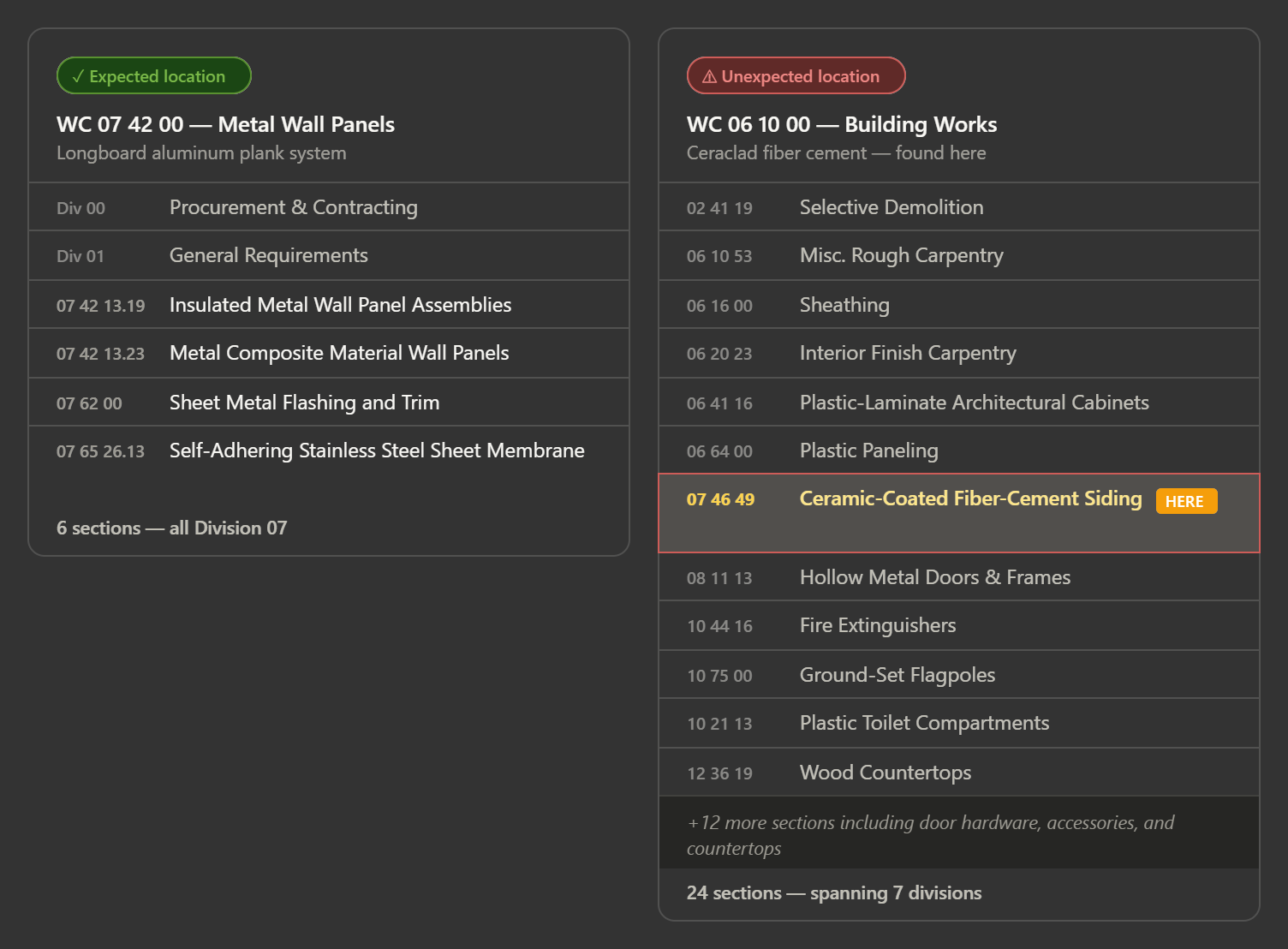
The metal panels had their own work category. The fiber cement did not. One project, two products, two bid forms. And a scope structure that required you to know the difference before the number went in.
We found it. We included it. That is what we do.
Signing the bid form implies thorough comprehension of the full intent and scope. Failure to find a discrepancy does not relieve the subcontractor of responsibility. No oral clarification is binding. Only written addenda count.
Control F was not optional. It was the job.
Two Games. One Project.
Most people think the challenge is finding the scope. That is only the first game.
The second game is knowing where it belongs on the bid form.
Finding 07 46 49 buried in a Building Works catch-all is one problem. Knowing the GC needs that product priced separately from the metal panel scope is a different problem altogether. Price them combined on the metal panel bid form and the number becomes unreadable during leveling. The GC cannot use it.
The right number in the wrong place
is the same as the wrong number.
We have absorbed that lesson more than once.
On a public project the stakes go up. Prequalification before the bid. Scrutiny on every number. Forms submitted on time, complete, absolutely accurate. No rounding. No estimating. No we will sort it out later.
The sub who masters both games is the sub the GC can actually work with when it matters.
What the Spec Won't Say in the Summary
Finding the scope and filling out the form correctly is still not the whole read.
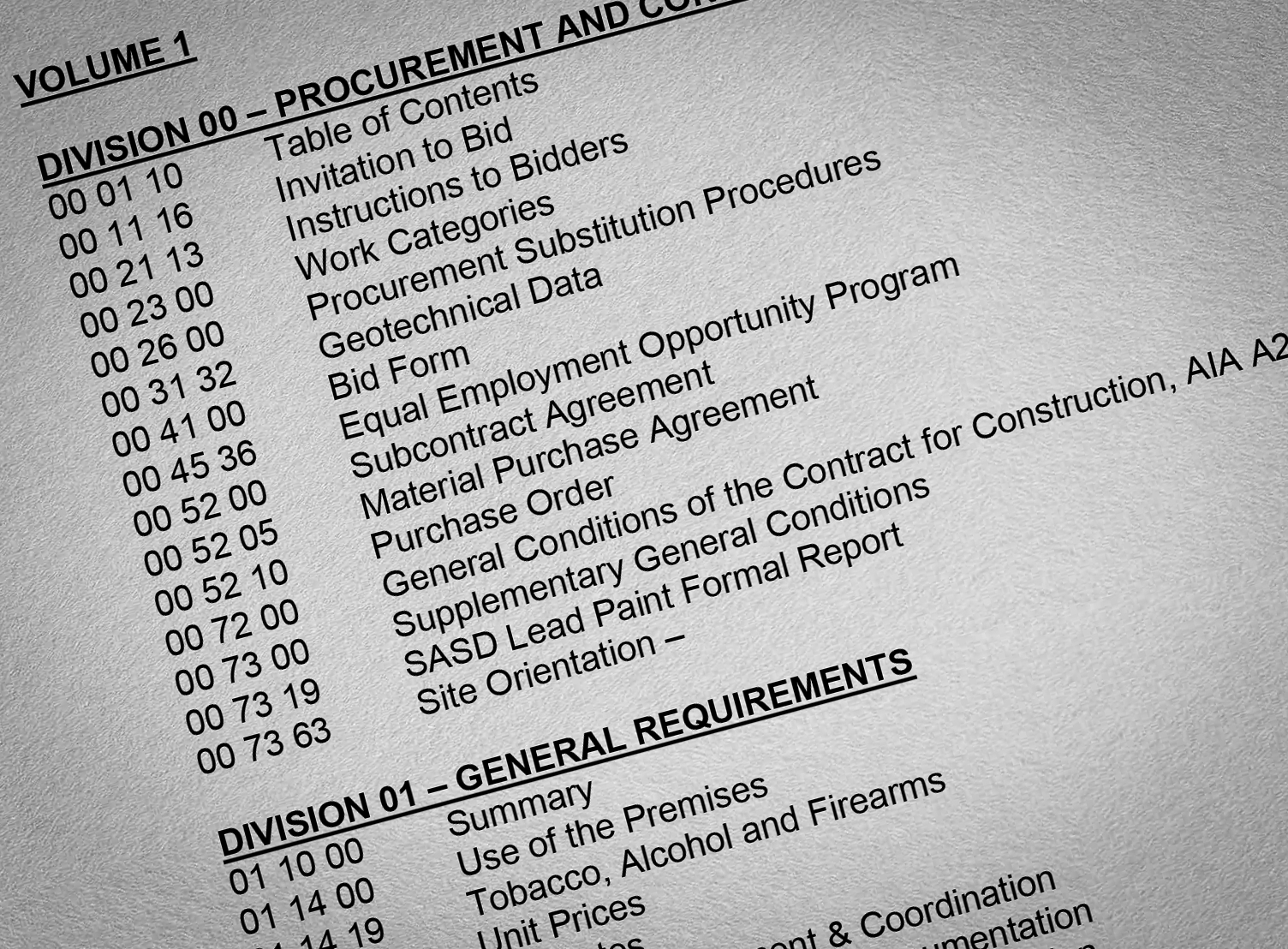
Product specs carry obligations that never show up in the work category summary. A fiber cement product buried in a catch-all still carries its fifty-year material warranty. A sixteen-week fabrication lead time does not start running from award day. It starts running from when the material needs to be on site. Those are not the same date.
Galvanic action between an aluminum panel system and a steel substrate does not fail at installation.
It fails in year eight.
That is when the building owner calls the GC who calls the architect who calls the sub who installed it. And everyone starts reading the original spec to figure out who missed what. The answer is usually whoever stopped reading first.
We read the Structural package. We cross-reference fastener specs against product installation requirements. We confirm dissimilar material compatibility before the number goes in. We track lead times from bid day because a sixteen-week window does not reset because the contract took six weeks to execute.
We price the whole job. Not the parts that were easy to find.
From the Estimator's Desk to the Last Panel
The estimator who opens the project owns it. Not just the number. The whole picture.
Scope confirmed across every division. Lead times flagged from bid day. Attachment requirements cross-referenced against structural. Bid forms structured the way the GC needs them during leveling. Known unknowns documented before a single line goes into the workbook.
When the number goes in it goes in clean. Priced to the whole job. Not padded. Not optimistic. Clean.
That estimator stays with the project through bid, through follow-up, through award. They carry the institutional knowledge. They know where the fiber cement scope was buried. They know what the Structural package said about the attachment system. They know what the lead time is and when it started running.
Then it becomes departmental. Project management picks up the thread. Shop drawings coordinated against the architect's elevations. Engineering confirmed against structural. The handoff works because the front-end work was complete.
Then it becomes company-wide. Field, production, quality control, warranty. The finished envelope is a company product. But the precision that makes it possible started at a desk, at seven in the morning, with someone running Control F through a spec manual looking for a fiber cement scope that had no business being in Division 6.
That is the chain.
Every link depends on the one before it.
The Follow-Up Nobody Talks About
After the number goes in, the work continues.
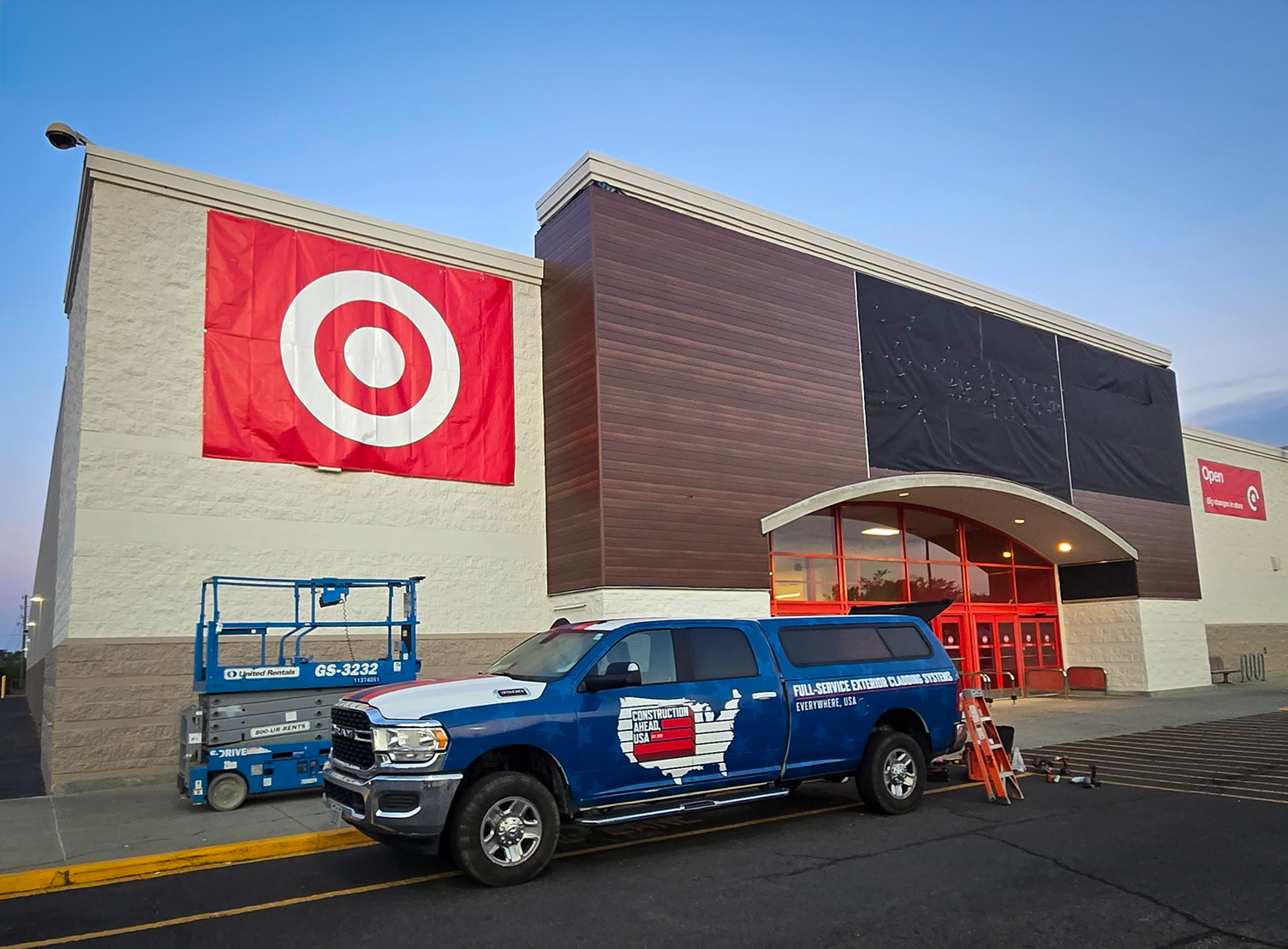
On this project the follow-up ran across multiple weeks. The GC was working through their owner contract before they could execute subcontracts. Our estimator kept showing up. Not with pressure. With information. A scope breakout when the GC needed the numbers separated. A confirmation of availability when the timeline shifted. A question that kept the conversation open without forcing it.
Win or lose on any single bid the cycle closes on itself and feeds the next one. A bid tab shows where you landed. A scope review conversation explains why your number was structured differently. A GC who works through a resubmission tells you something about how they operate and whether they are worth the next call.
Every outcome generates data.
Every relationship generates the next opportunity.
The estimator who treats every result as information worth keeping is building something. The one who moves on after a lost bid is just counting jobs.
Accurate Beats Cheap.
Every Time.
There is a version of estimating that generates RFIs, change orders, and warranty calls.
Open the scope summary. Take off the visible work. Apply a unit price. Submit the number. Wait.
That version occasionally wins jobs. It also generates RFIs when the attachment detail was never cross-referenced. Change orders when the lead time was not tracked from bid day. Warranty calls when the compatibility question was never asked and nobody wants to own the answer.
That version is not a shortcut. It is a deferred cost that shows up on someone else's schedule before it shows up on the sub's reputation.
The lowest number is not always the cheapest number. The cheapest number is the one that does not generate RFIs, change orders, warranty calls, and post-installation conversations about who missed what in the original documents.
We practice a different version. Every spec section gets read. Every lead time gets flagged at bid. Every attachment requirement confirmed against structural. Every bid form structured the way the GC needs it.
Then the number goes in. Then the follow-up starts. Then the project gets built the way it was drawn and paid for.
GCs, do you know which number on your bid tab that is before you award?
That is not an installer. That is a qualified partner.
The cost of finding them late keeps going up.
The cost of finding them
at bid stays the same.
About Construction Ahead USA
At Construction Ahead USA we hold to one standard: precision, reliability, and structure. Verified scopes. Clean documentation. Work performed to spec. Zero latent defects.
GCs trust us because we protect their schedules. Suppliers trust us because we protect their brands. Our crews trust us because our systems protect their craft.
Credibility is not declared. It is demonstrated one project at a time.